Way of the Hunter 2 vs Call of the Wild: Which One to Choose?
Debating between Way of the Hunter 2 vs Call of the Wild? Discover the key differences in realism, gameplay, and mechanics to pick your perfect hunting sim.
Published: Way of the Hunter 2 Wiki Editorial Team
Video Guide
Call of the Wild vs Way of the Hunter 2 - WHICH is BEST?!Table of Contents
The virtual hunting genre has reached a new peak with the arrival of recent simulations, leaving many enthusiasts caught in the crossfire of a classic debate: Way of the Hunter 2 vs Call of the Wild. Choosing between these two powerhouses is crucial, as they cater to vastly different player desires, from hardcore, methodical realism to accessible, adrenaline-fueled arcade action.
Whether you are a seasoned virtual tracker looking for the next level of immersion or a casual player seeking a relaxing escape, understanding how these titles stack up will save you time and maximize your enjoyment. In this guide, we dive deep into the mechanics, animal behavior, and player experiences to help you decide which title deserves your time and hard-earned cash.
Understanding the Philosophy: Simulation vs. Arcade
At their core, these two games operate on different philosophies. Call of the Wild has spent years building a community around a "great one" grinding system, fast-paced shooting, and satisfying arcade-style progression. Conversely, Way of the Hunter 2 emphasizes a high-fidelity, slow-paced simulation experience powered by Unreal Engine 5.
Key Differences at a Glance
Feature
Way of the Hunter 2
Call of the Wild
Game Engine
Unreal Engine 5
Proprietary Engine (Apex)
Play Style
Slow, methodical simulation
Fast-paced, objective-driven
Animal Logic
Complex genetics/age-based
Spawn-system focused
Primary Appeal
Realism & Immersion
Consistency & Grinding
As a community-led observation, many players note that Way of the Hunter 2 demands more patience. If you are the type of hunter who enjoys the "long game"—tracking animals over miles and understanding their specific habitat needs—this is your calling.
Realism and Graphics: The Unreal Engine 5 Advantage
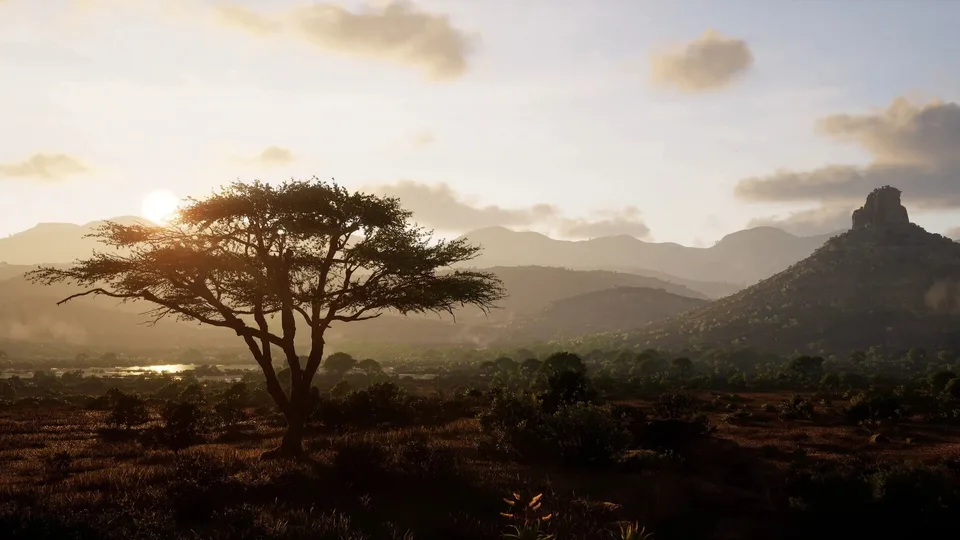
The visual fidelity in Way of the Hunter 2 is immediately striking. Running on Unreal Engine 5, the game offers a level of environmental detail—from the way trees sway in the wind to the subtle atmospheric fog—that makes you feel truly present in the wild.
Why Visuals Affect Your Hunt
Environmental Cues: High-resolution rendering allows for spotting distant movement that would be obscured in less detailed environments.
Ballistic Immersion: The game features ear-popping sound effects when firing, providing an visceral auditory experience that adds to the "real-life" feeling.
Animal Models: The models, particularly for lions and larger predators, show significantly more detail in fur rendering and skeletal animation.
Tip
Optimizing your experience
If you are running mid-range hardware, adjust your shadows and ambient occlusion first. Way of the Hunter 2 is graphically intensive, but sacrificing a few frames for better visibility of animal tracks is always worth it in a simulation.
Deep Dive: Animal Behavior and Genetics
One of the most significant arguments for choosing Way of the Hunter 2 vs Call of the Wild lies in the AI behavior. In the former, the ecosystem feels alive. Animals don't just exist as "targets"; they have age, fitness scores, and complex social structures like prides or herds.
How to Master the New Mechanics
Observe before Shooting: Don't rush your shot. Use binoculars to assess the fitness of an animal. Poor genetic traits mean that individual won't reach a trophy score.
Use the Dog: Utilize your canine companion to track blood or detect animal signs, especially when you are hunting in dense North American forests or the African wilderness.
Learn the Call: Unlike simple lure mechanics, specific calls can now attract specific ages of animals. Timing your calls is vital to avoid spooking the herd.
Comparing the Hunting Loop
If you are a fan of "grinding," you might initially miss the loop of Call of the Wild. However, Way of the Hunter 2 offers a different kind of satisfaction: the "earned" kill.
Comparison Table: Engagement Factors
Hunting Aspect
Way of the Hunter 2
Call of the Wild
Stalking
High difficulty, requires patience
Moderate, arcade-friendly
Tracking
Complex blood trails, sign-based
Visual markers, map-assisted
Trophy System
Based on age/genetics
Based on spawn tiers
Accessibility
Lower (Steeper learning curve)
High (Pick up and play)
According to official Steam store pages, the sequel builds on an expandable hunting lodge system. This gives players a reason to continue hunting long-term, filling their lodges with trophies from various regions.
Which Game Should You Buy?
Your choice depends on what you want to do with your evening. If you want to put on a podcast, run a familiar route, and harvest trophies efficiently, Call of the Wild remains the king of the "strategic animal killer" style. If you want to immerse yourself in a world that feels like an actual hunting trip, where the wind and distance matter, then Way of the Hunter 2 is your best bet.
Frequently Asked Questions (FAQ)
Is Way of the Hunter 2 significantly harder than other games?
Yes, generally speaking, it is designed as a pure simulator. It requires more skill regarding ballistics and patience. Many community members suggest that the difficulty is exactly why it feels more rewarding when you finally secure a big game trophy.
Can I play both games simultaneously?
Absolutely. Many players, as noted in community forums, treat Call of the Wild as their "chill out" game after work, while saving Way of the Hunter 2 for when they have time for a serious, multi-hour hunting session.
Does Way of the Hunter 2 have enough content at launch?
The game provides three distinct regions and a vast wilderness. While it may have fewer total maps compared to long-running titles, the depth of the ecosystems and the inclusion of the Hearth & Hunt lodge system provide plenty of long-term goals.
Why is the comparison between Way of the Hunter 2 vs Call of the Wild so common?
Both games occupy the same genre space but target different player personalities. Players often look for clarity on whether the new, more advanced simulation mechanics of the sequel outweigh the established, reliable fun found in the older title.